
Who thinks vaccines are amazing!? (Me.) Who loves to have needles inserted in them!? (NOT me.) In a previous post the advent of the anti-vaxxer mobilization was explored in the context of Andrew Wakefield’s “scientific” study. Despite his observations being dis-proven multiple times, the anti-vaxxer movement lives on. Selective hearing is in human nature. For anyone that despises the needles, doctors offices, and the screaming children associated with vaccines, it would be easiest to adopt the stance that prevents your interaction with them. But where is vaccine misinformation being funneled from? Experts have identified social media.
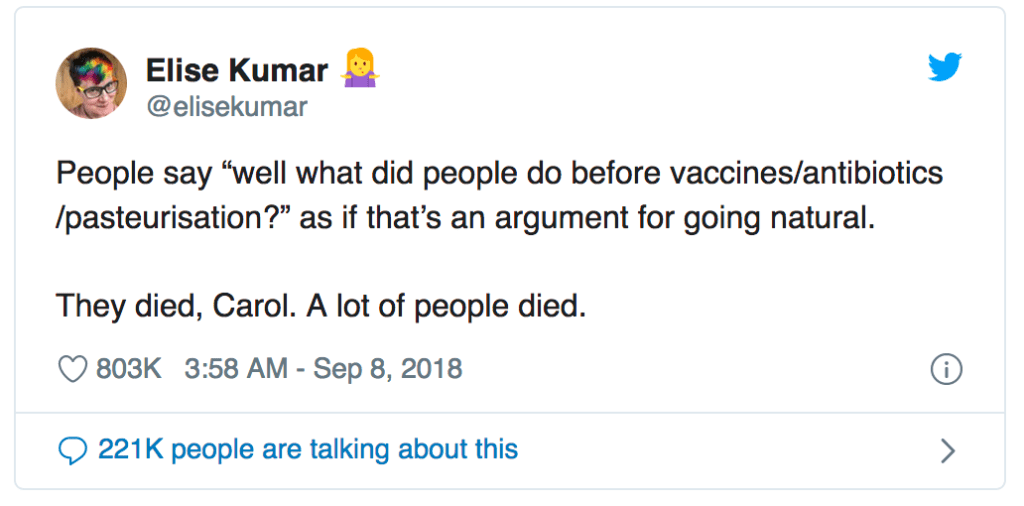
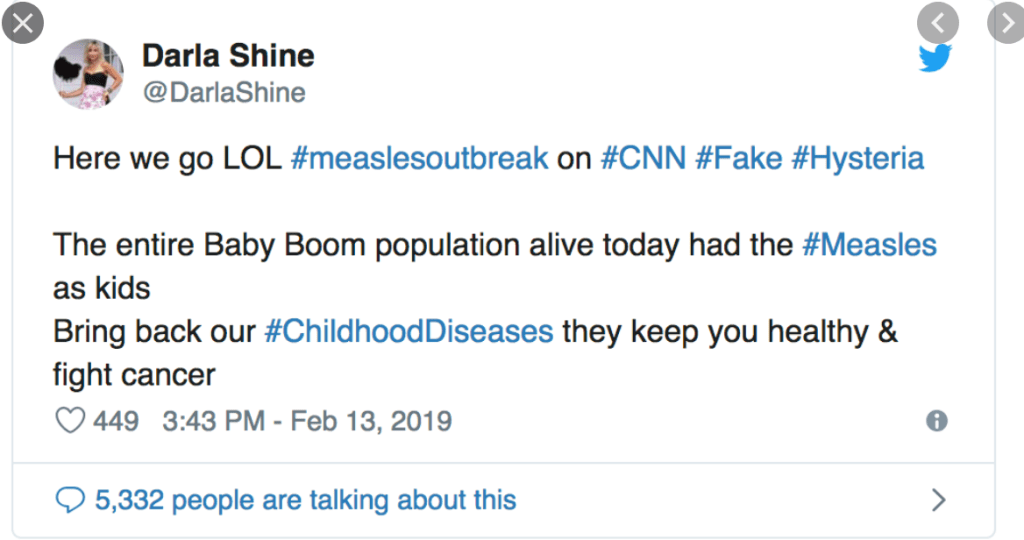
In the peak of Andrew Wakefield’s sentiments, social media did not play as large a role in public life. Most young people, including young parents, are never without easy access to Facebook, Twitter, and Instagram, where unqualified users amplify their opinions on vaccines. The term “vaccine hesitancy,” defined by WHO as a “delay in acceptance or refusal of vaccines despite availability of vaccination services,” perhaps better represents the situation occurring in developed nations such as the U.S. Parents who read a disturbing message about vaccines on Facebook may subconsciously (or consciously) delay vaccinating their children. The problem with this lies in herd immunity. Failing to reach immunization thresholds by just a few percentage points can cause massive outbreaks of dangerous preventable diseases such as chickenpox, measles, mumps and rubella (MMRV vaccine). Survey data shows a steady decline in the perceived importance of vaccines since 2001. A correlation exists between those most likely to be on social media and those populations with the lowest % declaring the importance of vaccines. Overall, 79% of people are saying they have heard “a great deal” or “fair amount” about the disadvantages of vaccines (as compared with 39% in 2001).
One interesting note from the linked survey (above), is the movement of Americans away from the idea that vaccines induce autism (10%). Other vague and unidentified reasons are now plaguing public attitudes towards vaccines. That middle of the road group (neither die-hard anti-vaxxer or die-hard vaccinator) is where social media exerts the greatest influence. With only 12% of American’s having proficient health literacy, the majority of people are prone to gaining vaccine information from internet sources. In addition to the dialogue based approach, national committees should be taking advantage of social media outlets. The facts need to be published in a way that is understandable and believable to the general public. Here you can read Taylor Sharp’s vaccine thread, that provides a great example of how to target an audience in need of vaccine education. Historical and health awareness alike is necessary to combat the recent climb in vaccine hesitancy. Reverse the trends of social media, and make the internet a positive outlet!

 Layna's Microbiology Blog