
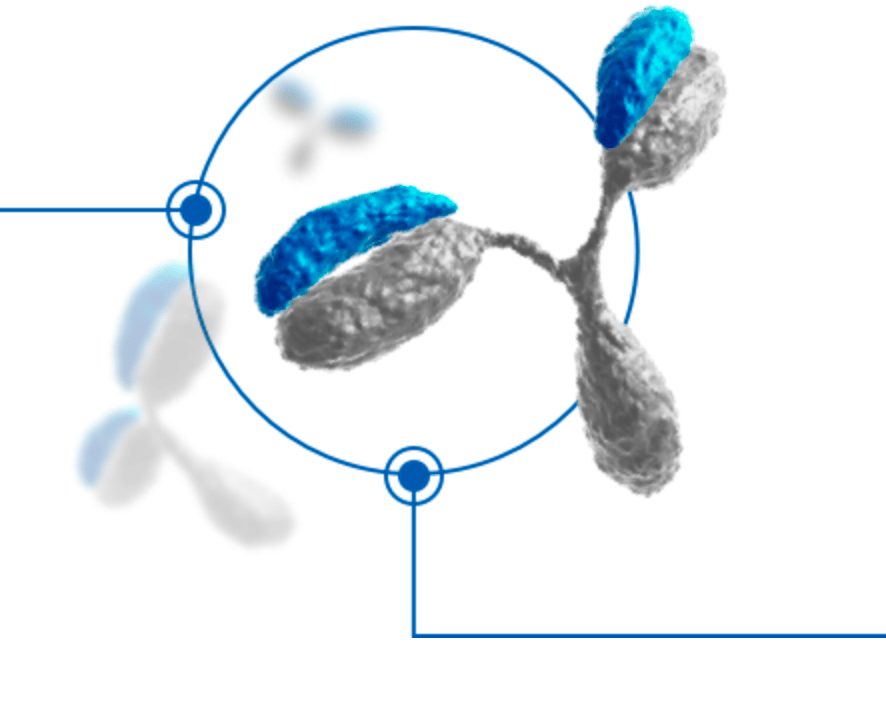
Most of the greatest scientific discoveries capitalize on the remarkable biochemistry that has evolved in nature. Exploring the research avenues for COVID-19 treatment, displays that developing an extraneous new small molecule antiviral drug or novel vaccine is inefficient, costly, and impossible to mass produce before this virus exerts maximum destruction. Currently, clinical trials with FDA approved drugs such as hydroxychloroquine and Remdesivir seem to be the best bet finding a way to reduce mortality. However, as a growing population recovers from the virus the potential to use convalescent plasma, containing natural fighters, or neutralizing antibodies, against COVID-19 infection is being investigated. Dr. Fauci, the director of the National Institute of Allergy and Infectious Disease, recently announced his hopes that plasma testing for convalescent antibodies could be widely available by mid April and used as a tool to allow gradual reopening of the nation. In addition to identifying individuals who are immune to the infection, this expanded testing will provide insight into the typical IgM and IgG antibody profile necessary to combat the virus.
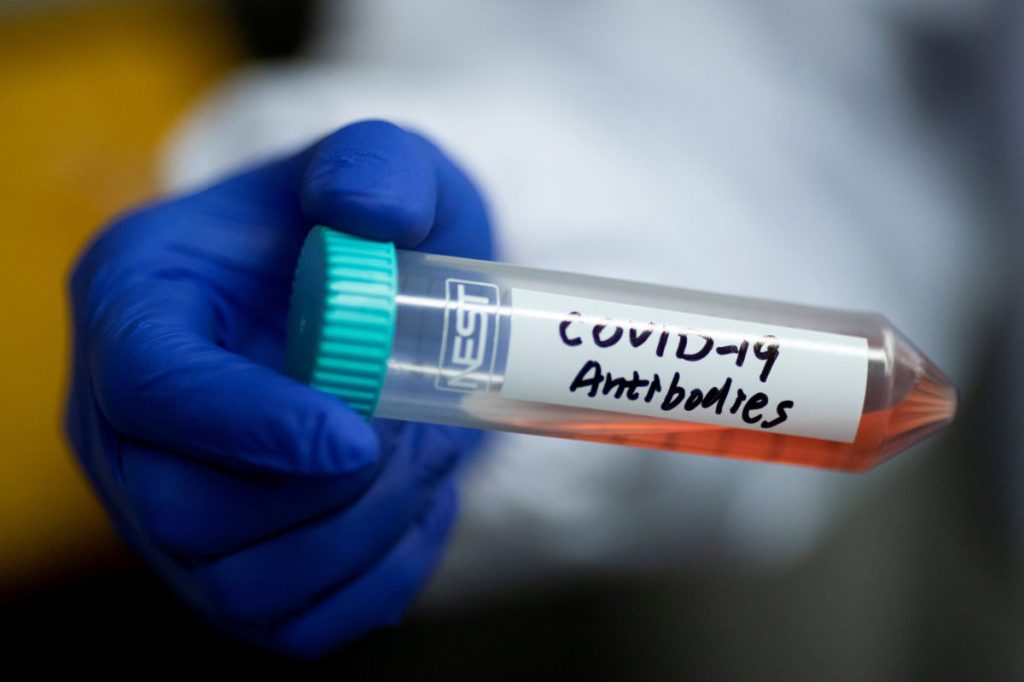
B cells are the immune lymphocyte responsible for producing a humoral , or antibody, response against all pathogens. Before activation, unique IgM and IgD antibodies coat the membranes of B cells and act as receptors for specific antigens. Every B cell will respond to only one antigen, accounting for the delay in antibody production and infection clearance, as the antigen must circulate through the body for some time before encountering its B cell receptor (BCR). Upon this encounter, the BCRs are crosslinked and an initial supply of IgM antibody is produced as a preliminary infection neutralizer. Not until a fully activated T helper cell binds to molecular signatures of the B cell can it produce a more effective antibody, such as IgG and IgA, to circulate in blood and tissues or secretions respectively. A rapid IgM-IgG antibody test has been designed for COVID-19 diagnosis in asymptomatic or symptomatic individuals. If a larger titer of IgM is detected it would indicate the individual is 3-6 days into the infection, while a larger titer of IgG would suggest 10-18 days into the infection and entering convalescence. Significant quantities of both classes would hopefully signify the individual is entering a phase of steady infection clearance, since a full humoral response is underway. This humoral profile for COVID-19 is expected in response to a novel virus, since no memory B cells, which would immediately begin secreting IgG or IgA upon BCR crosslinking, are present. A person found to be IgG positive for COVID-19 antibodies would be unlikely to contract or spread the infection because circulating IgG would immediately neutralize the virus. This natural fighter ability thus explains the potential use of serum tests as a way to determine who can return to community involvement.
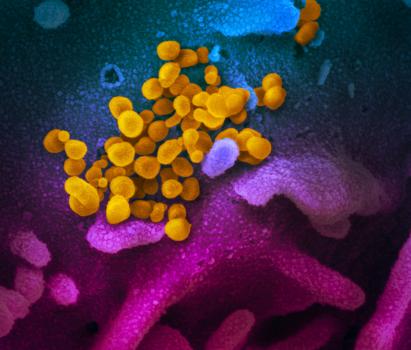
In addition to using testing to aid the reopening of society , investigation into the therapeutic potential of antibodies is pushing full speed ahead. The task of providing a newly infected person with a convalesced individual’s protective IgG antibodies is not as simple as a transfusion. The immune system can easily be overwhelmed by foreign substances. A more tactical approach involves finding the best human derived antibodies to fight the virus, and producing them on a mass scale in specialized mouse models. Regeneron, a biotech company in New York, recently announced their second proposal for therapeutic antibodies. The first proposal, Kevzara, involves an antibody against the IL-6 inflammatory cytokine receptor that aims to reduce an overactive inflammatory response in the lungs, which leads to rapid condition deterioration in some individuals. This drug is entering a phase 2/3 clinical trial in hospitalized patients. The second proposal involves a novel “antibody cocktail,” consisting of multiple fully-human virus neutralizing antibodies that target the COVID-19 glycoprotein spike. This cocktail may be successful in providing short term immunity to at risk individuals and those in early stages of infection, but it would not have the ability to charge the host’s immune system for subsequent attack like a vaccine would. There is also concern that the glycoprotein spike would be subject to change in the likely event that the virus mutates beyond recognition. Regeneron is only one company of many embarking on the path of antibody treatment, and there is hope that this option would be available sooner than a vaccine and could reduce infection spread significantly.

 Layna's Microbiology Blog